
So This Is Ownership: Your First Health Inspection Starts Before Opening Day
The counters shine, but can the restaurant demonstrate safe operation? Prepare the people, equipment, procedures, and evidence before treating the first inspection as a calendar event.
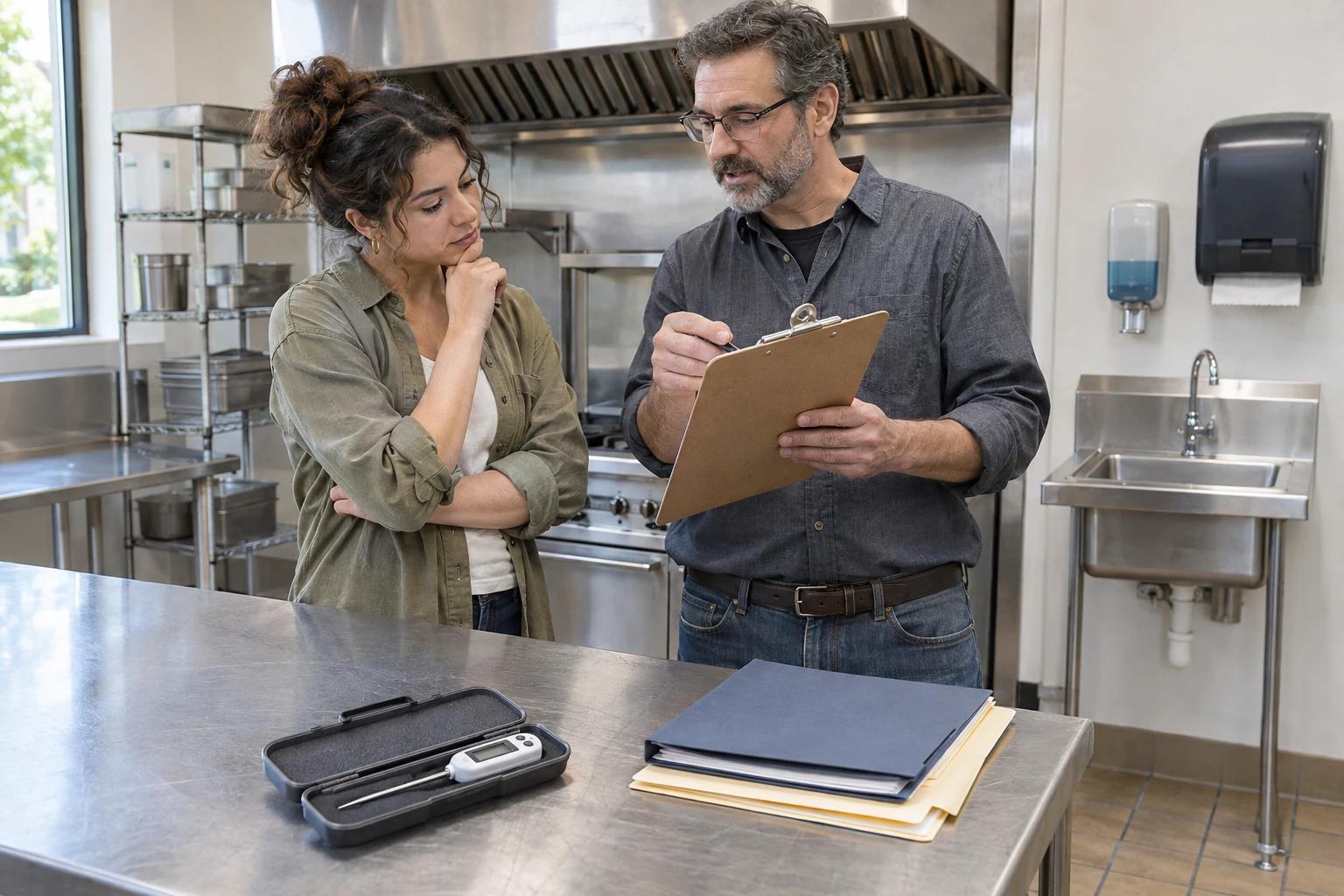
The stainless steel shines. The last cardboard box is gone. You look around the kitchen and think it finally feels ready.
Then someone asks where the sanitizer test strips are. Another person points to the refrigerator display, but nobody has checked whether the probe thermometer is ready to use. The opening folder contains the plans; the person leading the shift cannot yet explain what to do if food is outside its required temperature range.
This is a hypothetical preparation scene, not an actual inspection or a real owner's experience. It illustrates a gap worth finding now: a finished-looking restaurant and a restaurant prepared to operate safely are not necessarily the same thing.
Yesterday, we worked through kitchen layout and equipment decisions. Today, use those decisions to demonstrate readiness. The first health inspection belongs in the same preparation process as the menu, facilities, and team—not as a final cleaning appointment after everything else is decided.
Establish which inspection you are preparing for
Ask the authority responsible for your address what inspection applies to your project and what must be complete before requesting it. A new facility, remodel, and acquisition of an existing business can follow different routes.
For this article, the local example is Alameda County, California. Its plan-review FAQ says approved plans alone do not authorize operation: required inspections and agency sign-offs remain necessary. Its food-facility plan requirements identify pre-final and final inspections before bringing in food.
Confirm the instructions for your actual project, including when equipment should be running, what supplies should be present, and when food may be received. Do not stage a food service merely to rehearse before you have the required permissions.
Keep the Day 23 approval register open. Health approval is one part of the opening route; it does not replace required building or other agency approvals.
Prepare to explain the food, not just show the room
Bring the current menu and a short description of how each item moves through receiving, storage, preparation, cooking where applicable, holding, and service. Identify any cooling, reheating, delivery, or specialized process you intend to use.
Alameda County's food-safety FAQ identifies major risk factors including unsafe holding, cooling and cooking temperatures, poor employee hygiene, unapproved food sources, and contaminated equipment. That is a useful reason to organize preparation around risks rather than appearances.
Ask the person who will lead the shift to talk through one menu item. Where does it come from? How is it protected from contamination? Which measurements matter? Who checks them? What happens when a check fails?
A confident answer should point to the actual equipment, supplies, procedure, and responsible person. “We will be careful” leaves too much work unfinished.
Walk the facility as a working system
Use the approved project documents, agency instructions, and equipment manuals to develop the facility review. The following is an original preparation worksheet, not an official inspection checklist or a promise of approval:
AreaWhat to demonstrate or resolve before the visitWater and sinksThe required facilities work; handwashing supplies are in place; access is clearTemperature controlEquipment is operating as instructed; suitable thermometers are available and staff know how to use themWashing and sanitizingStaff can demonstrate the selected process, including verification tools appropriate to the methodFood and utensil storageThe planned arrangement protects food, clean items, and packaging; chemicals have an appropriate separate locationEquipment and finishesInstalled equipment matches the reviewed scope; surfaces can be accessed and cleanedWaste and pest preventionStorage, removal, and prevention arrangements are established; defects are addressedPeople and proceduresRequired credentials and relevant instructions are available; staff can explain the work
For California requirements, use the 2026 California Retail Food Code, available through Orange County's health agency, together with the instructions of your own enforcement agency. Its provisions cover personnel, food protection, equipment, sanitation, water, and facilities. This article is not the complete code.
Do not tick an item because a contractor installed it. Confirm that it works in the arrangement you will actually use. If something differs from the reviewed plans, take it to your designer and reviewer rather than hoping it goes unnoticed.
Assemble a folder someone else can use
Keep the latest approved plans, inspection correspondence, outstanding correction list, equipment specifications, relevant operating instructions, and permit records together. Add food-source information, employee training records, and any required operational procedures as applicable to your business.
Label documents precisely. A submission receipt is evidence of submission. It is not an issued permit. A scheduled appointment is not an inspection result.
Ask the agency which documents must be available and who should attend. Designate a team member who knows the project and can record findings. Make sure the owner is not the only person who can locate a crucial instruction on a phone.
Check food-safety certification requirements early. The County's manager-certification registration guidance explains the certification requirement for facilities handling unpackaged, potentially hazardous food, subject to the stated exclusions. Confirm what applies to your operation, including separate food-handler requirements. A future training booking does not establish that a required credential is already in place.
Rehearse the decisions that a clean room cannot show
Use a dry exercise with empty containers and scenario cards. Ask a trained supervisor to observe, then discuss the decisions without serving food.
Try three scenarios:
- A delivery arrives while the receiving employee is busy. Who verifies the supplier, condition, and applicable temperature requirements before accepting it?
- An employee reports vomiting before the shift. Who receives the report and applies the illness policy, and who arranges coverage?
- A refrigerator check is outside the operating target. Who stops affected use, evaluates the food's documented history, and seeks guidance under the established corrective-action procedure?
The FDA Employee Health Policy Tool can support illness-policy discussions, but it expressly directs users to applicable local health codes. Have the actual restriction, exclusion, reporting, and return-to-work procedures established for your jurisdiction. Do not improvise medical clearance during a staffing shortage.
Write down what the exercise reveals. Missing instructions, inaccessible tools, and uncertain responsibility are preparation tasks you can assign and finish.
Turn findings into completed work
If your own review finds a problem, record the issue, responsible person, action, and evidence needed to close it. Recheck the correction rather than replacing an unresolved item with a reassuring note.
During the agency visit, listen, ask for clarification, and retain the findings. Establish which corrections are required, whether reinspection is necessary, and what remains before operation is authorized. Never assume that silence about one item settles another approval.
The inspection is an important checkpoint. Your operating routines must continue after it. A check performed only when an inspector is expected does not protect the next shift.
Return to the imagined kitchen. The counters still shine, but now the readiness is more substantial: the thermometer is available, the sanitizing method is understood, and the shift leader can explain what happens when something goes wrong.
The companion article turns that preparation into habits the team can follow when orders arrive faster than expected.
If you already run a business and want to see how findable it is today, YupUp offers a free SEO audit.
Sources
- Alameda County Environmental Health, Plan Review FAQ and Food Facility Plan Requirements — final inspections and operating authorization.
- Alameda County Environmental Health, Food Safety FAQ — major foodborne-illness risk factors.
- California Retail Food Code, effective January 1, 2026, hosted by Orange County Health Care Agency — California operational and facility framework; apply through the local enforcement agency.
- Alameda County Environmental Health, Food Safety Manager Certification Registration — manager-certification scope; not a complete account of all credentials.
- FDA, Employee Health Policy Tool — policy-development support with local-law qualification.
Need a review and local marketing system?
YupUp helps independent businesses manage reviews, local visibility, and customer follow-up with AI-assisted workflows.
Get a free growth review