
So This Is Ownership: What a Small Food Test Can Tell You—and What It Can’t
The last order has gone out, and the kitchen is quiet. Before turning a busy lunch into a restaurant forecast, separate what customers did, what the work required, and what still needs testing.
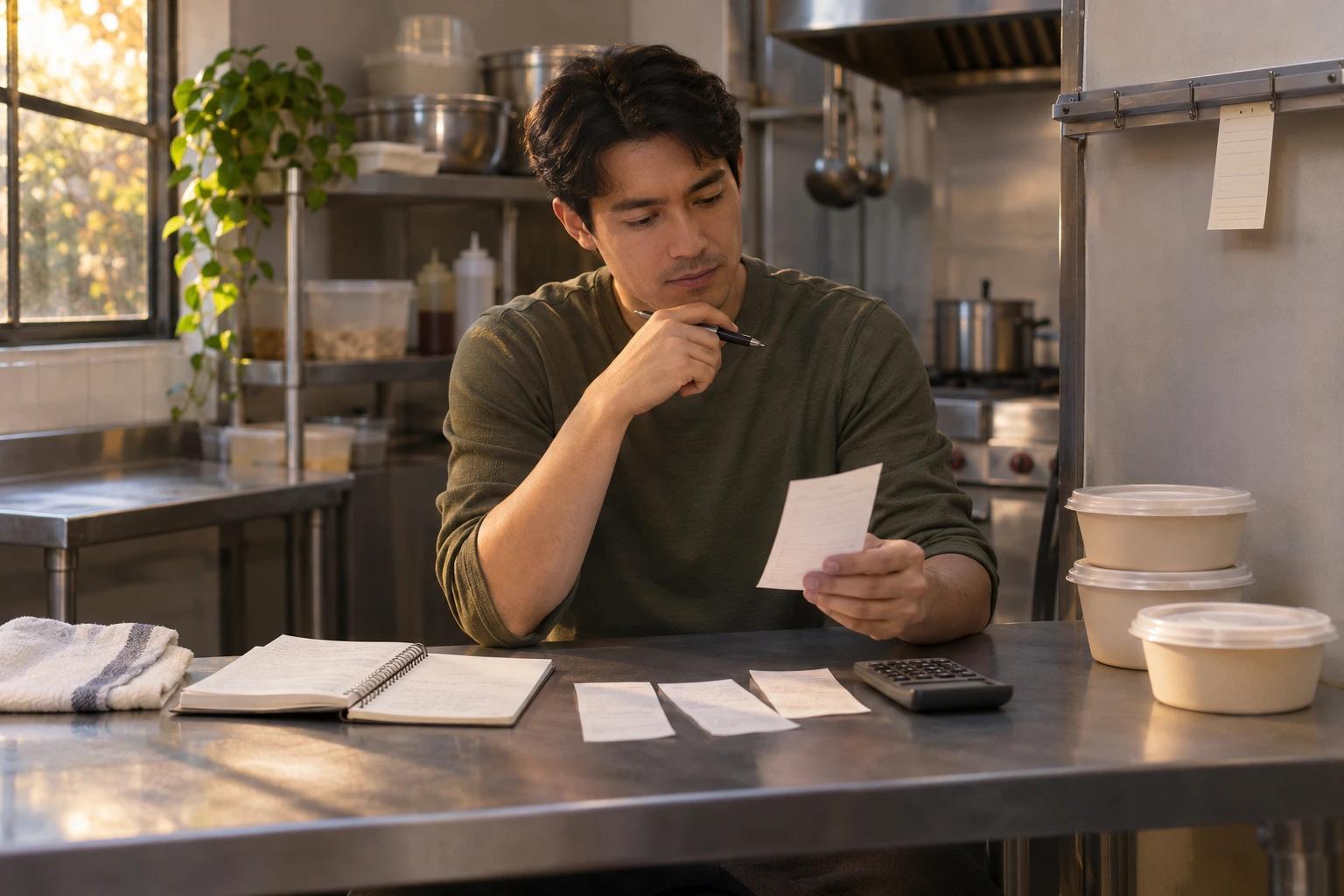
What a Small Food Test Can Tell You—and What It Can’t
The last takeaway bag has left the counter. Someone has sent a kind message about the food. You look at the empty containers and feel an urge to open the photograph of that storefront again.
Then you find an order ticket underneath the notebook. Was that meal collected? Was it refunded? And how many of today's buyers were people you already knew?
This is a hypothetical illustration, not a report of an actual trial. It begins at a moment when enthusiasm and evidence are easy to mix together.
Earlier today, we planned a small restaurant test without a lease. Now imagine the necessary permissions were obtained, the approved service took place, and the cleaning is finished. What can the experience justify doing next?
The answer needs more care than “everyone loved it” or “we sold out.” A test becomes useful when you can describe what happened, under which conditions, and which decision it informs.
Reconstruct the trial before judging it
Write the offer at the top of the results page: menu, portion, price, service date, collection window, audience, sales route, and quantity available. Record any changes made during the trial.
Then reconcile the orders. Separate purchases from reservations, cancellations, no-shows, complimentary meals, refunds, and fulfilled orders. Record partial refunds accurately rather than making every transaction fit a simple yes-or-no label.
Keep order counts, meal counts, and buyer counts separate. One buyer may order several meals. Several orders may come from one person. A sold meal and a repeat customer answer different questions.
Add how buyers reached the offer, using information you actually collected. Do not reconstruct a marketing channel from memory because it seems likely.
If the records are incomplete, say so. A small honest gap is easier to investigate than a confident number built from guesses.
Look for the purchasing decision you intended to test
Our provisional case is still weekday lunch collected to eat elsewhere. If the trial instead attracted mainly friends making a special trip, the meals may have been welcome, but the intended routine remains less tested.
The SBA's market-research guidance identifies demand, location, competing options, and pricing as questions to investigate. Your trial contributes evidence about those questions only within its actual circumstances.
Use three columns to keep the conclusion proportionate:
ObservationWhat it supportsWhat it leaves openSomeone completed a paid purchaseThat buyer accepted that offer on that occasionWhether they will return or buy at another priceThe available meals sold outSales reached the quantity suppliedHow much more demand existed, or whether everyday demand is sufficientBuyers praised the flavorThose respondents reported liking the foodWhether portion, price, access, or convenience supports another purchaseCollection worked for scheduled ordersThe process handled that trial's order patternWalk-in demand, a larger rush, or a different locationSome buyers returned for another paid trialRepeat behavior occurred among those buyersA dependable long-term purchase rate across the wider market
These are interpretation guides, not statistical claims. No single row establishes restaurant viability.
Put denominators beside the encouraging numbers
Imagine a fictional trial with 24 fulfilled orders. That sounds different when you learn that 18 were from friends and relatives and six were from other buyers. Neither group needs to be dismissed; they need to remain distinguishable.
Now imagine saying that half the buyers returned. Was that half of all buyers, half of those invited to another trial, or half of the people who answered a follow-up message? The denominator changes the meaning.
Before describing conversion, ask whether you reliably know how many relevant people encountered the offer. Social impressions, passing foot traffic, and people who actually considered the menu are different measures. If the relevant exposure is unknown, report purchases and the exposure gap instead of inventing a conversion rate.
Also record practical constraints. Did orders close early because the kitchen slot ended? Did the host supply most of the audience? Were discounted meals mixed into the full-price total? A result can be promising and still depend on conditions you have not shown you can repeat.
Observe the work, including the rescue
Think back to Day 1's ordinary Tuesday. The product was only part of the owner's job. Your food trial can make the surrounding work visible.
Record preparation, ordering, packing, transport where applicable, setup, service, cleanup, and administration. Identify who did each task and whether they were paid. Write down borrowed equipment, discounted access, and favors.
Pay attention to moments when someone rescued the process. Perhaps the host answered customer questions while you packed. Perhaps a friend made an extra supply trip. Those are hypothetical examples, but they illustrate useful records: the trial depended on work that belongs in the next plan.
If you measured order timing, define the start and end points. A collection-time result is difficult to interpret if some orders were ready before arrival and others began afterward. Look for clusters of delay rather than hiding them inside one average.
Do not push volume beyond the authorized setup or safe operating capacity simply to generate a stronger number. The FDA's food-business overview points readers to the relevant state and local agencies for their product and facility. A business experiment does not replace that review.
Give complaints and silence a place in the record
Invite feedback without asking the customer to endorse your dream. With permission, ask what they expected, what they received, what was inconvenient, and what they chose instead when they did not buy.
A useful question for someone who purchased is: “What would have to be the same or different for this to fit another workday?” It invites detail without treating a future intention as an order.
Record how feedback was gathered and how many people responded. Nonresponses are missing feedback, not satisfaction. A positive message is not permission to publish a testimonial, and a request for another service date is not a completed second purchase.
Do not collect more personal information than you need. Use order references and broad, self-reported audience categories where possible; keep customer contact details out of a public article or presentation.
Count resources before calling it profitable
An account balance after lunch does not describe the economics of a permanent restaurant.
Build a dated record of sales, discounts, refunds, ingredients used, packaging, paid help, facility charges, transaction fees, and other trial costs. Record owner and unpaid-helper hours separately. Separate remaining usable supplies from discarded or consumed stock; purchases and consumption are not necessarily the same amount.
For now, distinguish a factual cash record from a complete profit calculation. Taxes, labor treatment, allocation of costs, and the planned business structure need appropriate professional guidance. This article supplies no margin benchmark or tax rule.
A trial may use a favorable kitchen rate and borrowed equipment. A storefront would introduce a different cost structure. Another trial might also become cheaper as setup work becomes reusable. Record the differences rather than declaring either outcome inevitable.
Tomorrow's articles—People Like the Food. Can the Numbers Work? and Where the Money From One Customer’s Order Actually Goes—will use those records to examine the next question. Bring the receipts and the time sheet, not just the sales total.
Write the next decision in one paragraph
Complete these sentences before committing more money:
We tested ___ for ___ under these conditions: ___. We observed ___. The records are incomplete about ___. This supports ___. It does not establish ___. Our next step is ___ because it will investigate ___. Our spending and time limits are ___.
You might choose another comparable trial, a change to collection, a simpler menu, or a pause while a permission or cost problem is resolved. State the reason. Avoid changing every part of the offer at once if you want to understand which revision mattered.
A repeat test is worth doing when it answers a remaining decision. Repeating an enjoyable service without a question can become a way to postpone the harder calculation.
Keep the conclusion small enough to trust
The empty counter and kind message can matter. So can the missed ticket, the extra helper, and the buyer who liked the food but could not make collection fit their break.
The useful result is a more accurate description of the business you might own. You can learn that a dish travels poorly, a collection window is inconvenient, or a particular customer returns. You cannot turn those observations into proof of a lease, a full restaurant, or a reliable income.
In this YupUp.ai series, we have been choosing the next commitment one question at a time. Put the trial record beside the storefront photograph. Before going further, ask what each order required—and whether the numbers can support doing it again.
Need a review and local marketing system?
YupUp helps independent businesses manage reviews, local visibility, and customer follow-up with AI-assisted workflows.
Get a free growth review