
So This Is Ownership: Build a Menu Around Your Customer’s Day, Not Just Your Favorite Dishes
Your favorite dish earns a place on the menu when it fits a buying occasion and an operation you can deliver. Use a lunch scenario to build a small menu draft with a clear job for every item.
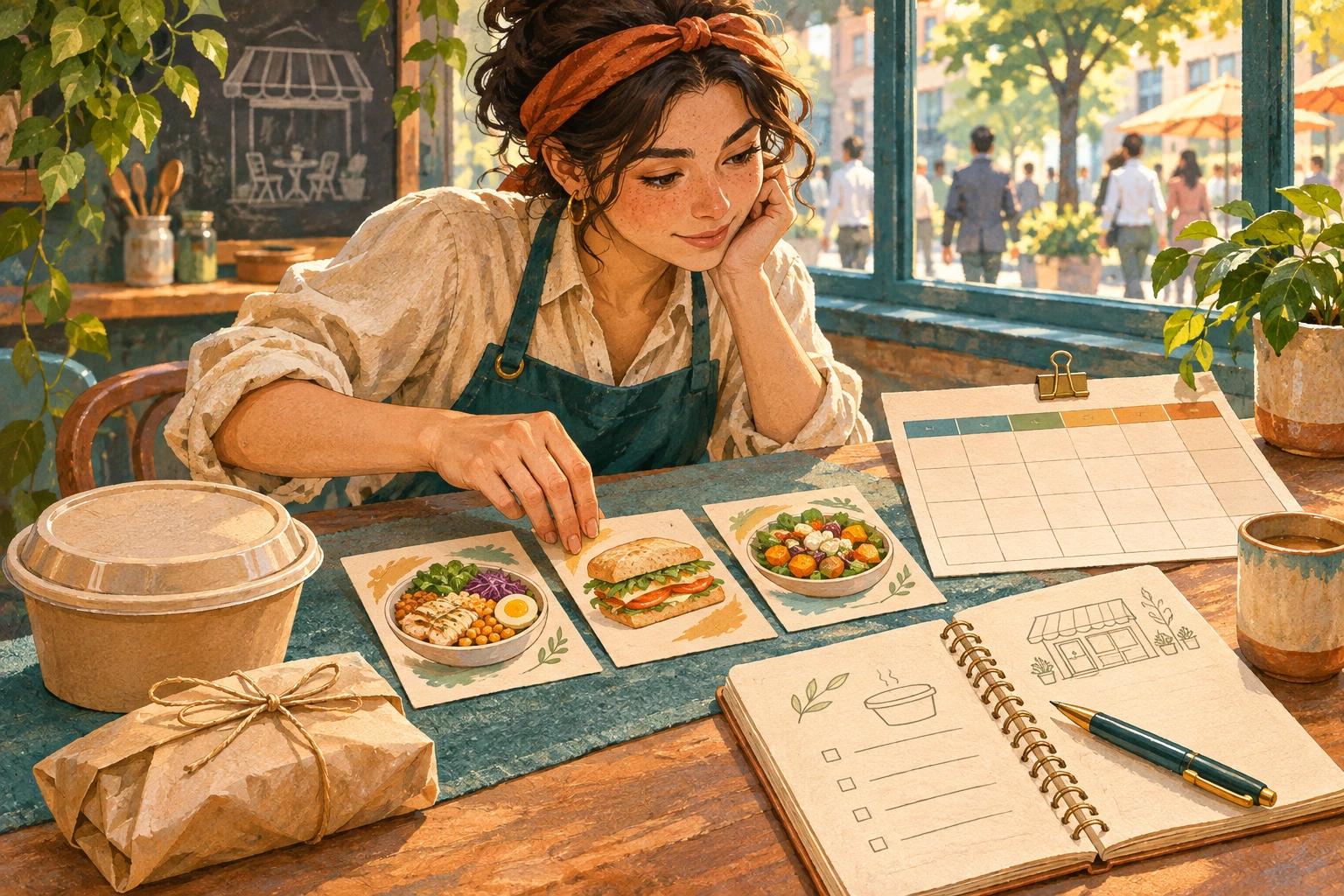
The dish you most want to serve arrives on a beautiful plate. There is a sauce to pour, something crisp to add at the last moment, and a final arrangement you would hate to rush.
Now picture the customer from today's first article. They plan to collect lunch and eat it back at work.
On the planning table, put an empty takeaway container beside the plate. What would need to change?
This is a hypothetical menu exercise, not a real product test or an account of a restaurant. The dish may still belong in your business. First, you need to decide whether it belongs in this offer, for this occasion, in a form the operation can deliver.
Yesterday, we mapped work in three restaurant formats. Earlier today, we drafted a customer brief. Now the menu needs to connect the customer's meal to the work behind it.
Write the occasion at the top of the page
For our provisional example, the occasion is an individual weekday lunch, collected from a counter and eaten elsewhere. The customer, location, price, food, and operating arrangements remain unverified.
Write a short brief with five fields:
- Occasion: Why is the person buying this meal now?
- Decision: What information would help them choose?
- Receiving: How would they order and obtain it?
- Eating: Where and how do they expect to eat?
- Boundary: What will this first version not attempt to offer?
A dining-room lunch would need a different brief. A meal for several people to share at home would need another. Do not make one menu carry all three before examining the extra work.
Keep the first version small enough that you can explain the role of every item. There is no universal right item count established here.
Give each proposed item a reason to exist
Start with a few candidate dishes you can credibly develop. Ask what job each performs for the occasion rather than beginning with a long list of favorites.
Here is a fictional working draft, not a recommended commercial menu:
Candidate
Intended job
Question to investigate
Main bowl
A complete individual lunch in one package
Does the intended customer want this meal, portion, and way of eating?
Wrapped sandwich
A different eating format
Does it meet a distinct need, or duplicate the bowl without adding value?
Small side
An optional addition
Does it improve the occasion enough to justify its work and ingredients?
Your plated signature dish
Express the food you want to be known for
Can it become a suitable lunch offer, or does it belong in a different occasion?
No candidate gets automatic approval. If two dishes have the same job, compare them. If an item has no clear customer purpose, put it on a later-ideas page rather than leaving it on the first menu by default.
A focused offer can still express your point of view through flavor, ingredients, and care. You are deciding where to concentrate that effort.
Design the meal beyond the kitchen pass
For each candidate, sketch the intended journey: choosing, ordering, preparation, checking, packaging, collection, travel, opening, and eating.
At each step, ask what must be learned. Will the person have utensils? Does the portion suit the occasion? Can they understand what is included? What happens to the intended texture and presentation between collection and eating?
Do not answer the last question from imagination. Plan an appropriate product evaluation with qualified food-safety guidance and lawful facilities before distributing food. A paper drawing cannot establish safe handling or how a dish performs in practice.
The plated favorite may become a separate future offer. It may inspire a redesigned dish. It may be exactly right for a seated experience. Let the occasion guide the decision instead of forcing the container to preserve a presentation it was never designed for.
Make the description earn its space
Draft a plain-language menu description for each candidate. State what the item is and what is included. Identify decisions the customer needs to make, and remove decorative wording that conceals the answer.
For example, a working description might read: “Roasted vegetable bowl with rice and lemon dressing.” That is a hypothetical description, not a verified recipe or an ingredient declaration. Actual wording must match the actual product.
Write down the questions the description fails to answer. Portion? Choice of base? Included side? Collection arrangement? Do not promise a dietary or allergen attribute because the name sounds compatible with it. Those claims need verified ingredients, preparation arrangements, and applicable guidance.
Price belongs in the plan too. Research what the intended customer currently pays for comparable occasions, then work through your own costs. An attractive competitor price does not show that you can profitably match it. Order economics comes on Day 19; keep uncosted prices clearly provisional.
Map the work added by each item
Take one candidate and list the ingredients, sourcing questions, preparation tasks, equipment, storage, service steps, packaging, cleaning, and knowledge the team would need.
Then add the next candidate. Circle what is genuinely shared and underline what is new.
If the sandwich needs a separate preparation process, record it. If a side adds another ingredient used nowhere else, record that too. Sharing an ingredient is not automatically a reason to keep an item; needing a new one is not automatically a reason to reject it. You are making the commitment visible.
For each optional modification, ask how the request will be recorded, communicated, prepared, and checked. Avoid offering unlimited substitutions merely because the first imagined customer might ask for them.
Return to the role and hours you selected yesterday. If the proposed menu needs skills, equipment, or coverage missing from the plan, resolve the gap before treating it as ready.
Keep menu research separate from permission to serve
In the United States, the FDA's food-business overview identifies state and local government as the regulators of restaurants and other retail-food establishments, and advises discussing the actual product and facility with relevant agencies.
Use that as a reason to check your particular proposal. It is not a permit checklist, an exemption, or authorization for a home-kitchen test. The menu and processes you propose need to be part of that discussion.
For now, customer interviews, paper menu drafts, and process mapping can improve the concept without representing that food service has been approved. Tomorrow's installments will examine small food tests and their limits.
Walk one order through the draft
Ask someone who experiences your intended occasion to read the draft without an explanation first. With permission, ask them to describe what they think they would receive, what they would need to decide, and what remains unclear.
Do not ask only whether the menu looks good. Ask which current lunch it might replace and what would stop the purchase.
Record their words accurately without turning a casual conversation into a published testimonial. Keep their interpretation separate from your inference.
Then walk the proposed order through the operation on paper. Who receives it? What do they need to know? Which items demand attention at the same point? What must be checked before handoff?
This exercise can expose ambiguity. It cannot prove willingness to pay, throughput, repeat demand, safe procedures, or taste after travel. Those need other evidence.
Finish with a menu you can learn from
Use one row per item:
Field
Record before calling the item ready for a test
Customer purpose
The occasion and need the item is meant to serve
Product
Proposed recipe, portion, and unresolved development
Information
Accurate description and claims needing verification
Work
Ingredients, process, equipment, people, and handoff
Economics
Cost questions, provisional price, and evidence needed
Test question
One important uncertainty to examine
Decision
Develop further, revise, hold, or remove
Review the whole menu for duplication and gaps. Removing a favorite from this draft does not mean abandoning the food you love. It may mean giving it a setting where you can deliver it properly.
The plate and takeaway container are still on the table. By now, you should be able to say why each dish belongs, what the customer needs to understand, and which question comes next.
That is enough to move from a collection of favorites to a researchable offer. In the next installment of this YupUp.ai series, we ask Can You Test Your Restaurant Without Signing a Lease? Bring the menu and its unanswered questions.
Need a review and local marketing system?
YupUp helps independent businesses manage reviews, local visibility, and customer follow-up with AI-assisted workflows.
Get a free growth review